



日本の変な校則についてーJapanese strange school regulationsー
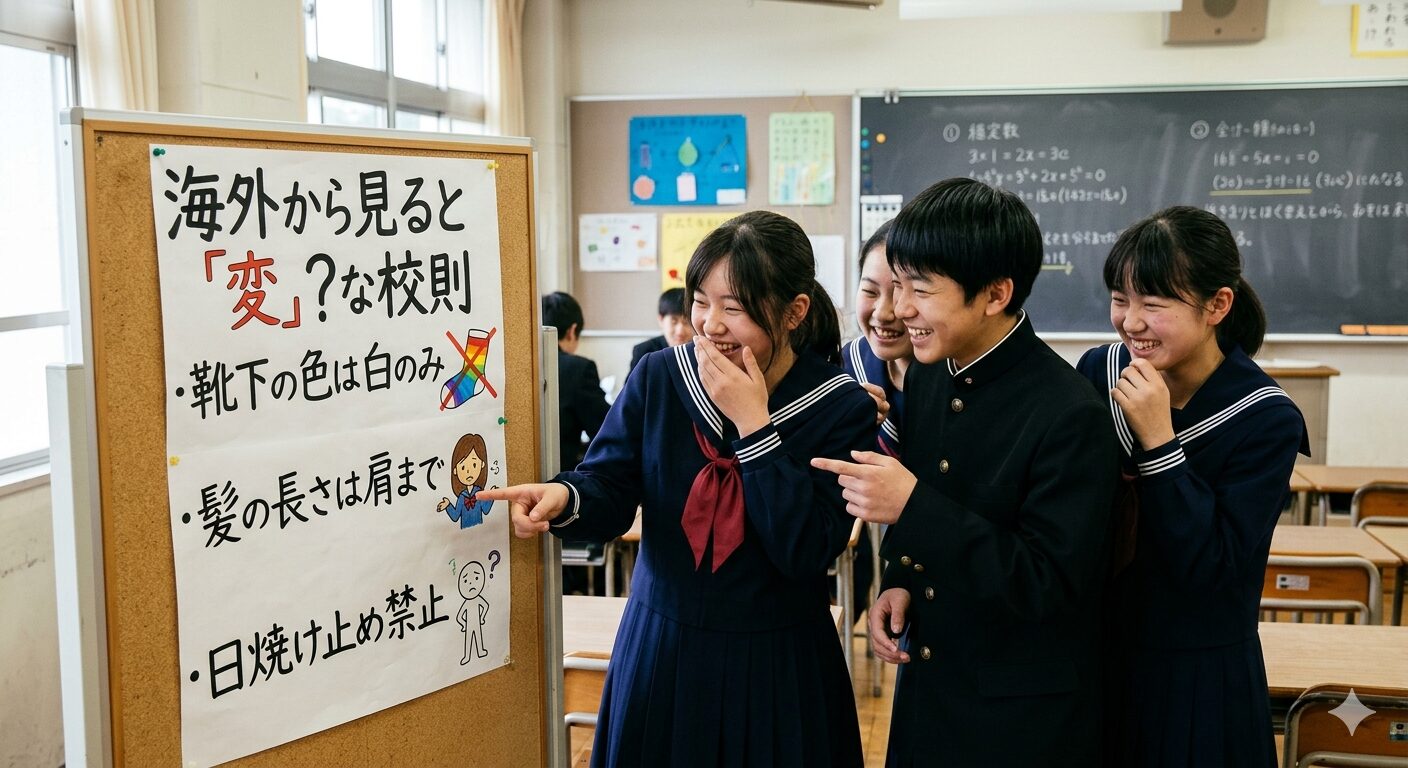
Japanese schools are often known for their strict rules, and some of them may seem unusual to people from other countries. One major feature is the limitation on students’ self-expression. For example, students are not allowed to freely choose the colors of their sweaters, socks, or shoes. In many schools, they must wear white shoes and white socks, which makes everyone look almost the same.
Hairstyle regulations are also very strict. Some schools require girls to tie their hair in a certain way, such as keeping a ponytail below ear level. Students are usually not allowed to dye or perm their hair, even if they want to express their individuality. In some schools, even specific hairstyles like a “two-block haircut” are not allowed for boys, as they are considered too fashionable or inappropriate. Boys also face similar restrictions, such as not being allowed to use hair wax or style their hair freely.
In addition, there are many rules about personal belongings. Students are often not allowed to bring smartphones, games, or even simple items like playing cards. However, recently many schools have introduced tablet devices and Wi-Fi, which creates a contradiction. While personal devices are restricted, students can still access games and the internet through school-provided technology.
School uniforms also come with detailed regulations. Students must button their shirts properly and tuck them in, even during hot weather. These rules are meant to maintain discipline and a sense of unity, but they can sometimes feel uncomfortable or unnecessary.
On the positive side, these strict rules can help students learn teamwork and responsibility. By following the same rules, students may develop a sense of belonging and cooperation. However, too many restrictions can make students feel stressed and limit their creativity.
Overall, Japanese school rules have both advantages and disadvantages. While they promote order and group harmony, they may also reduce opportunities for students to express themselves freely. Finding a balance between discipline and individuality is an important challenge for the future of education in Japan.
WPM計測タイマー
読書スピードを楽しく測ってみよう!✨☁️
🐬 けいそく結果 🐬
📖 最近のきろく
単語表(日本語付き・TOEIC/英検対策)

上記の英語から、役立つ英単語をピックアップしています!例文と一緒に覚えましょう!
| 原型 | 品詞 | 発音記号 | 日本語の意味 | 類義語 | 例文 |
|---|---|---|---|---|---|
| strict | 形容詞 | /strɪkt/ | 厳しい | severe, rigid | The teacher is very strict about rules. |
| unusual | 形容詞 | /ʌnˈjuːʒuəl/ | 珍しい、普通でない | strange, uncommon | This custom is unusual in my country. |
| limitation | 名詞 | /ˌlɪmɪˈteɪʃən/ | 制限 | restriction, limit | There is a limitation on phone use. |
| self-expression | 名詞 | /ˌself ɪkˈspreʃən/ | 自己表現 | individuality | Art is a form of self-expression. |
| freely | 副詞 | /ˈfriːli/ | 自由に | openly, without restriction | Students cannot speak freely here. |
| require | 動詞 | /rɪˈkwaɪər/ | 要求する、必要とする | demand, need | The job requires English skills. |
| certain | 形容詞 | /ˈsɜːrtən/ | 特定の | specific, particular | Students must follow certain rules. |
| express | 動詞 | /ɪkˈspres/ | 表現する | show, convey | She expressed her opinion clearly. |
| individuality | 名詞 | /ˌɪndɪˌvɪdʒuˈæləti/ | 個性 | uniqueness | The school respects individuality. |
| restriction | 名詞 | /rɪˈstrɪkʃən/ | 制限、規制 | limitation, control | There are restrictions on clothing. |
| belongings | 名詞 | /bɪˈlɔːŋɪŋz/ | 持ち物 | possessions | Please take your belongings with you. |
| introduce | 動詞 | /ˌɪntrəˈduːs/ | 導入する、紹介する | bring in, adopt | The school introduced new rules. |
| contradiction | 名詞 | /ˌkɒntrəˈdɪkʃən/ | 矛盾 | inconsistency | This rule creates a contradiction. |
| access | 動詞 | /ˈækses/ | 利用する、アクセスする | reach, use | Students can access the internet. |
| device | 名詞 | /dɪˈvaɪs/ | 機器、装置 | equipment, gadget | This device is useful for studying. |
| regulation | 名詞 | /ˌreɡjʊˈleɪʃən/ | 規則、規定 | rule, law | The regulation must be followed. |
| maintain | 動詞 | /meɪnˈteɪn/ | 維持する | keep, preserve | We must maintain order in class. |
| discipline | 名詞 | /ˈdɪsəplɪn/ | 規律 | control, training | Discipline is important in school. |
| unity | 名詞 | /ˈjuːnəti/ | 団結 | togetherness | The team showed great unity. |
| responsibility | 名詞 | /rɪˌspɒnsəˈbɪləti/ | 責任 | duty | Students learn responsibility. |
| cooperation | 名詞 | /koʊˌɒpəˈreɪʃən/ | 協力 | teamwork | Cooperation is necessary for success. |
| advantage | 名詞 | /ədˈvæntɪdʒ/ | 利点 | benefit | This rule has many advantages. |
| disadvantage | 名詞 | /ˌdɪsədˈvæntɪdʒ/ | 欠点 | drawback | There are some disadvantages too. |
| opportunity | 名詞 | /ˌɒpəˈtjuːnəti/ | 機会 | chance | This is a good opportunity to learn. |
| balance | 名詞/動詞 | /ˈbæləns/ | バランス、均衡 | equilibrium | We need a balance between study and play. |
【日本語訳】日本の変な校則について
日本の学校は厳しい規則で知られていることが多く、その中には他の国の人々にとって奇妙に思えるものもあります。大きな特徴の一つは、生徒の自己表現に制限があることです。例えば、生徒はセーターや靴下、靴の色を自由に選ぶことができません。多くの学校では白い靴と白い靴下を着用しなければならず、そのためみんながほとんど同じように見えてしまいます。
髪型に関する規則も非常に厳しいです。いくつかの学校では、女子は耳より下の位置でポニーテールにするなど、決められた方法で髪を結ぶことが求められます。たとえ自分の個性を表現したいと思っても、髪を染めたりパーマをかけたりすることは通常認められていません。また、いくつかの学校では、「ツーブロック」のような特定の髪型も、流行的すぎたり不適切と見なされたりするため、男子には禁止されています。男子も同様の制限を受けており、ワックスを使ったり自由に髪型を整えたりすることは認められていません。
さらに、持ち物についても多くの規則があります。生徒はスマートフォンやゲーム、さらにはトランプのような簡単なものさえ持ち込むことが許されない場合が多いです。しかし最近では、多くの学校がタブレット端末やWi-Fiを導入しており、これは一種の矛盾を生んでいます。個人のデバイスは制限されている一方で、学校が提供する技術を通してゲームやインターネットにアクセスすることは可能なのです。
また、制服にも細かい規則があります。生徒は暑い時期であっても、シャツのボタンをきちんと留め、シャツをズボンやスカートの中に入れなければなりません。これらの規則は規律や一体感を保つためのものですが、時には窮屈で不要に感じられることもあります。
良い面としては、こうした厳しい規則は、生徒がチームワークや責任感を学ぶ助けになります。同じ規則に従うことで、生徒は所属意識や協力の精神を育むことができます。しかし、制限が多すぎると、生徒にストレスを与えたり、創造性を制限してしまったりする可能性もあります。
全体として、日本の学校の規則には長所と短所の両方があります。規律や集団の調和を促進する一方で、生徒が自由に自己表現する機会を減らしてしまう可能性もあります。規律と個性のバランスを見つけることは、日本の教育の将来にとって重要な課題です。
最後に
教育に関心のある方なら、自分事として英語が理解しやすい英文になっているかもしれません。興味のあるトピックほど、自分が表現したい英語として、習得が速くなると思います。是非、音声を使ってディクテーションしたり、WPMを計測して速読の練習をしたりして、英語力向上を目指してください。この記事が英語力向上を目指すみなさんの、お役に立てれば幸いです。

コメント